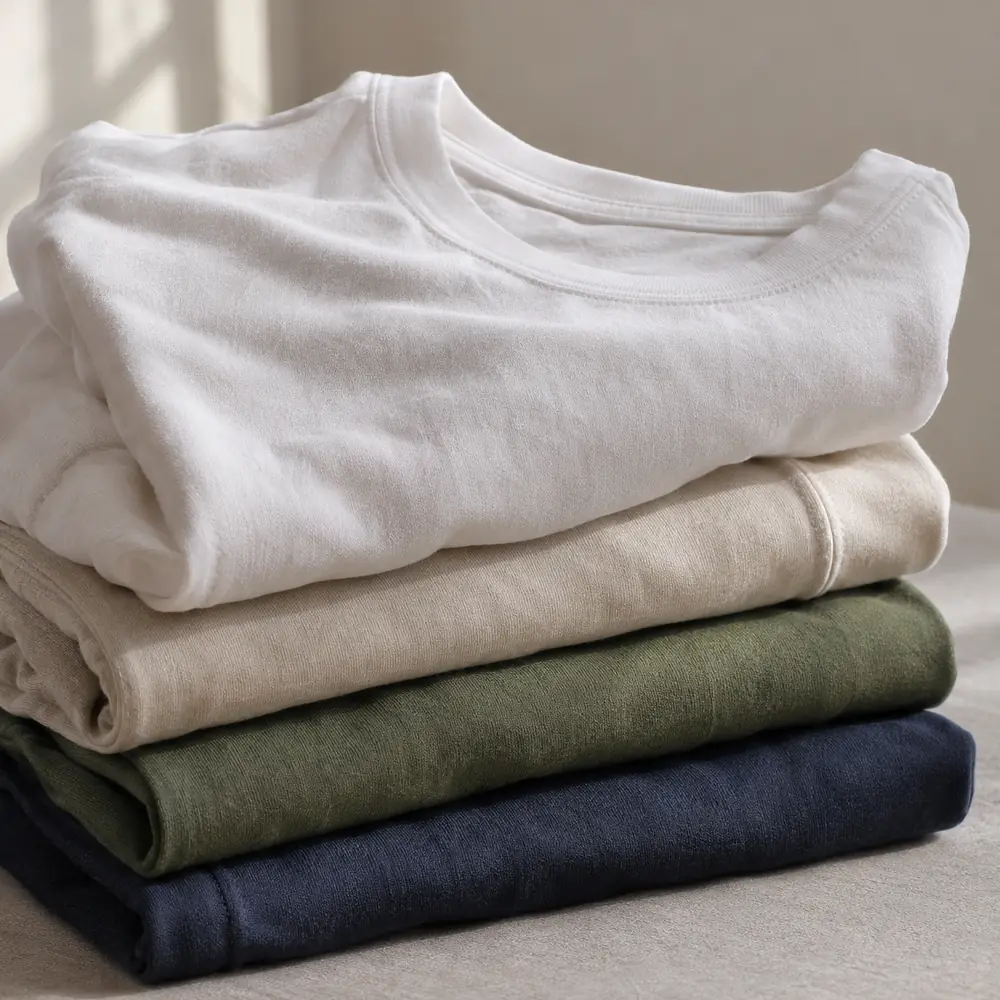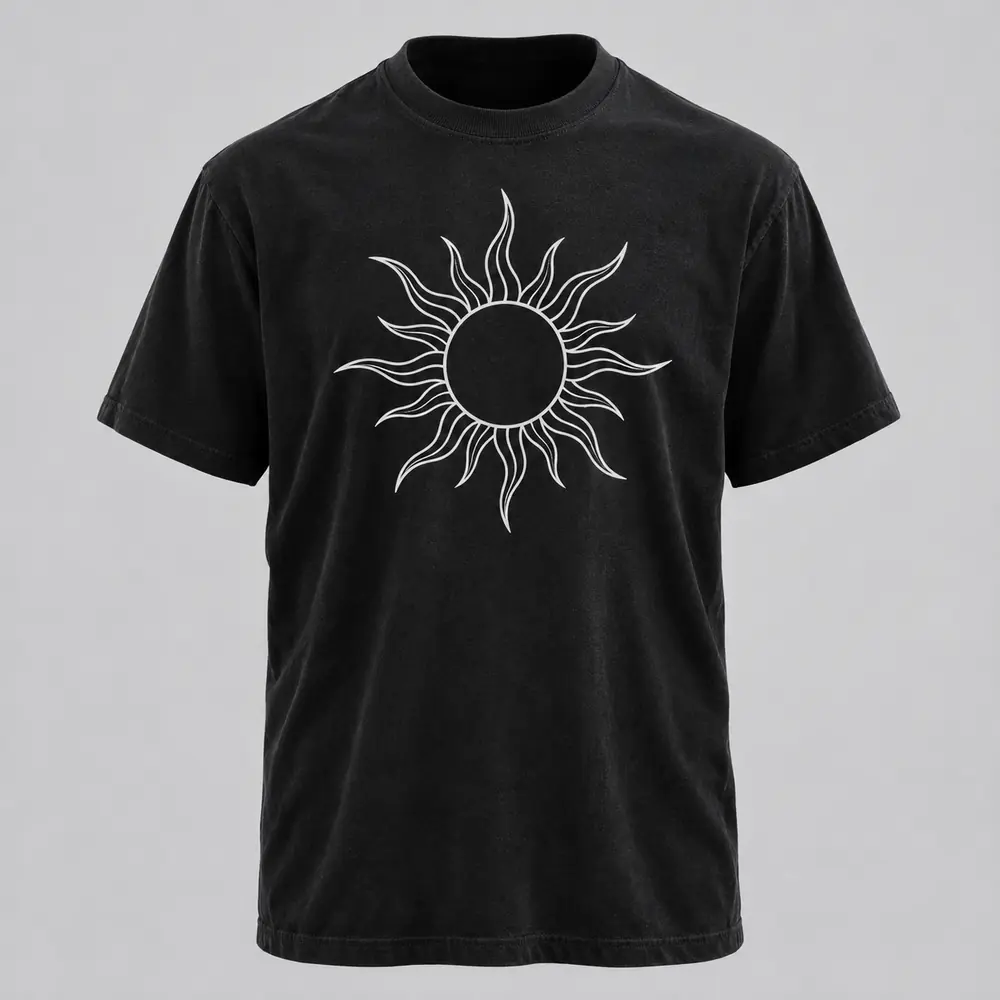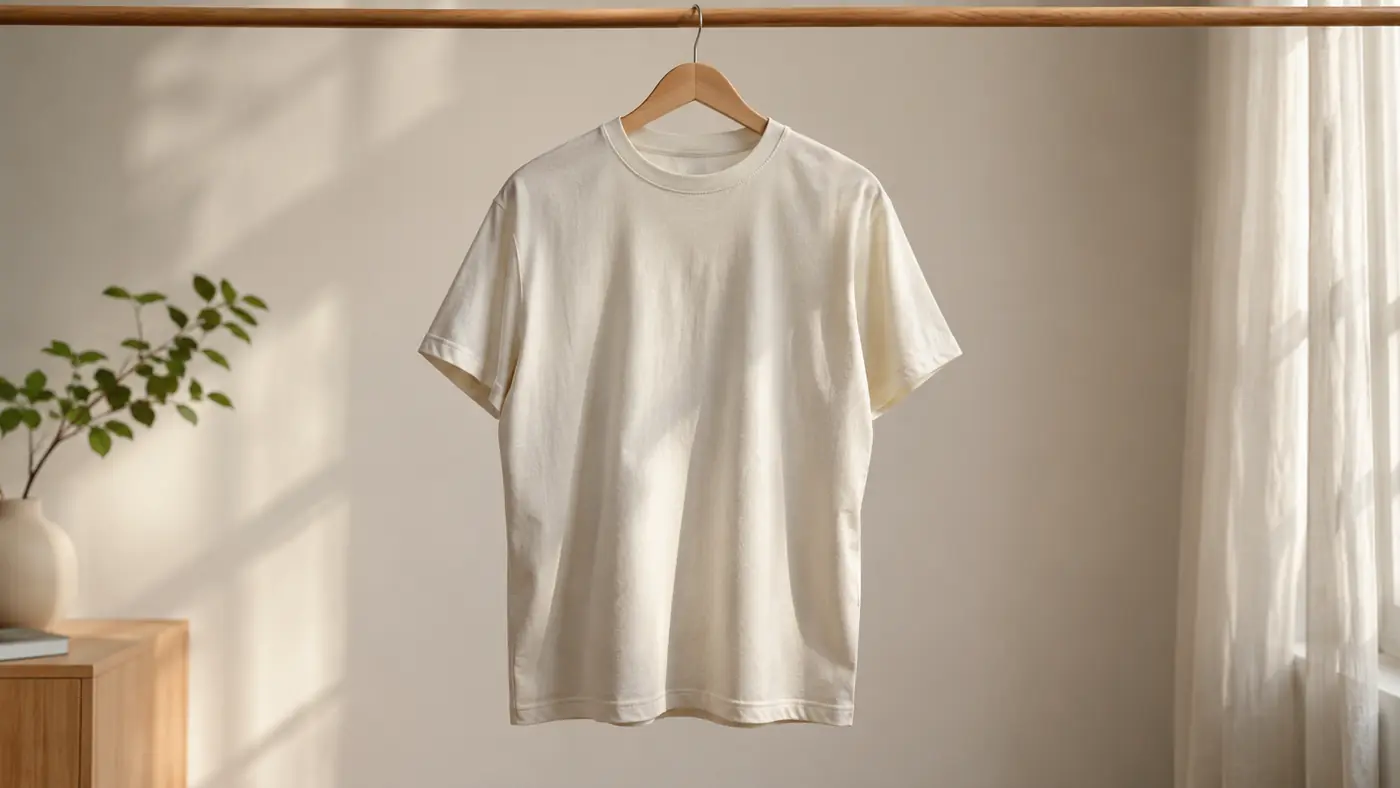
Heavyweight t-shirts are everywhere right now, from streetwear drops to band merch tables. A heavyweight t-shirt uses denser, thicker cotton than a classic tee, so it drapes differently, holds its shape and takes a print beautifully. Here is what “heavyweight” really means, why people love it, and when we still recommend a lighter shirt instead.
What makes a t-shirt heavyweight
Fabric weight is measured in ounces per square yard in the US, or grams per square meter (GSM) elsewhere. Since one ounce per square yard is about 34 GSM, as the units of textile measurement show, a 6.5 oz tee is roughly 220 GSM.
| Weight | About | How it feels |
|---|---|---|
| Light, 4 to 4.5 oz | 135 to 155 GSM | Thin, drapey, cool in the heat |
| Classic, 5 to 5.5 oz | 170 to 185 GSM | The everyday tee most people know |
| Heavyweight, 6 oz and up | 200 GSM and up | Dense, structured, a little boxy |
| Super heavyweight, 7 oz and up | 240 GSM and up | Thick, almost like a light sweatshirt |
There is no official cutoff. Still, most of the industry calls 6 oz and above heavyweight. Our own natural heavyweight tee is 6.5 oz ring-spun cotton.
Why heavyweight t-shirts took over
Trend reports for 2026, like this one from Realthread, keep putting heavy, boxy blanks near the top of the list. We see the same thing in our studio, but only one of the reasons is fashion.
The look
A heavyweight tee does not cling. Instead, it falls straight from the shoulders, often with a dropped shoulder seam and a slightly boxy body. So that shape reads as vintage workwear and modern streetwear at the same time.
They last
Thicker cotton also holds up to washing better. The collar stays flat longer, the body does not twist as easily, and the shirt keeps its shape after a season of wear. In short, people keep heavyweight shirts longer, which matters if your logo is on it.
They feel like value
Pick up a heavyweight t-shirt and it feels substantial. For a band or a brand, that changes how people judge the whole product, print included. A great design on a flimsy shirt feels cheap, while on a heavyweight it feels like merch people want.
How a heavyweight t-shirt takes a screen print
This is where we get excited, because a dense, tightly knit surface gives ink a stable base. Water-based prints sink in evenly and look rich on natural cotton. Plastisol also sits cleanly with crisp edges. On a thin, loose tee, however, the same ink can look a little patchy.
Heavier fabric also handles big prints better. A large back print on a light tee can make the shirt stiff and pull it out of shape. On a heavyweight, though, it simply sits there. Our guide to water-based vs plastisol explains which ink we pair with which fabric.
When a heavyweight is the wrong choice
We print a lot of heavyweights, but they are not right for every job. So we sometimes steer people away from them.
- Summer events in Florida. A 6.5 oz shirt is warm, so for an outdoor 5K in July a classic tee is kinder.
- Tight budgets on big runs. Heavyweight blanks cost more. Over 200 shirts, then, that adds up fast.
- A fitted look. If you want a slim, close fit, a heavyweight’s boxy cut will feel wrong.
- Very fine, detailed photo prints. These often look sharpest on a smooth classic tee instead.
How to choose a size in a heavyweight t-shirt
First, most heavyweights run boxy and a little short in the body. As a result, people who like a relaxed fit usually take their normal size. If you prefer a closer fit, size down. For a team order, ask for a size run or check the size chart before you order 50 of one size.
Larger sizes use more fabric, so 2XL and up cost a little more as blanks. We show that clearly in every quote, as we explain in how much screen printing costs.
Caring for heavyweight cotton
Heavyweight cotton can shrink a little in a hot dryer, like any cotton. So wash it cold, inside out, and dry it low or hang it. Our full guide on how to wash screen printed shirts covers the print side too.
Ring-spun, carded or combed?
Weight is only part of the story, because how the cotton is spun matters too. Ring-spun cotton is twisted into a finer, stronger yarn, which feels softer and gives a smoother surface for ink. Carded open-end cotton, on the other hand, is cheaper and a little rougher. Combed cotton has the short fibers brushed out, so it is smoother still.
A good heavyweight t-shirt is often ring-spun, which is why it can feel both thick and soft. Our natural heavyweight is 6.5 oz ring-spun cotton for exactly that reason.
Heavyweight t-shirt vs classic tee for printing
| Question | Classic tee | Heavyweight t-shirt |
|---|---|---|
| Feel | Light, familiar | Dense, structured |
| Cut | Regular, closer fit | Boxy, dropped shoulder |
| Print surface | Smooth, great for detail | Stable, great for big prints |
| Blank cost | Lower | Higher |
| Best for | Events, giveaways, hot days | Merch, clothing lines, gifts |
Neither is better in every case. Still, when people will pay for the shirt, the heavier one usually earns its price.
Our take on the heavyweight t-shirt
If your shirt is the product, like band merch, a clothing line or a gift, choose a heavyweight. It makes the print look better and the shirt last longer. However, if your shirt is a uniform for a hot day or a giveaway at scale, a classic tee is the smarter buy.
Want to feel the difference first? Our natural heavyweight tee and classic white tee are in the shop. When you are ready to print, start a custom run and we will help you pick the blank.
Heavyweight tee questions
What weight is a heavyweight t-shirt?
There is no official cutoff, but most of the industry calls 6 oz per square yard, about 200 GSM, and above heavyweight. Our natural heavyweight tee is 6.5 oz, about 220 GSM.
Do heavyweight t-shirts shrink?
Like any cotton, they can shrink a little in a hot dryer. Wash cold and dry low or hang dry to keep the fit.
Are heavyweight tees too hot for summer?
They are warmer than a classic tee. For outdoor summer events in Florida we often recommend a lighter shirt.
Should I size down in a heavyweight?
Most heavyweights run boxy. Take your normal size for a relaxed fit, or size down for a closer fit.