Screen printing vs DTG is the question behind almost every custom shirt quote. Both put a design on a tee, but they work in completely different ways, and the right one depends mostly on how many shirts you need and what your artwork looks like. We are a screen printing studio, so we will be upfront about our bias, and also about the jobs where DTG is the better call.
Two ways to put ink on a shirt
Screen printing pushes ink through a stencil on a mesh screen, one color at a time. Each color needs its own screen. Once the screens exist, however, every extra shirt is quick: lower the screen, pull the squeegee, cure, repeat.
Direct to garment (DTG) works more like a desktop inkjet printer. So the shirt lies on a flat platen and print heads spray water-based ink straight into the fabric. There are no screens, so the first shirt costs about the same to make as the hundredth.
In short, that single difference, setup versus no setup, explains most of what follows.
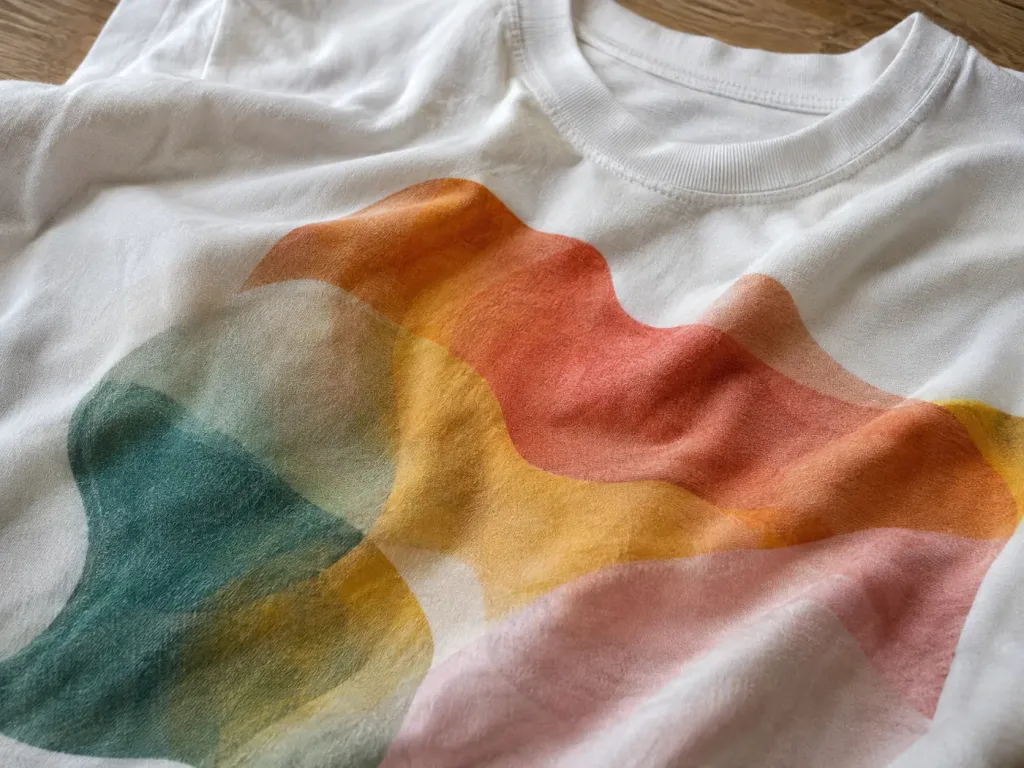
Screen printing vs DTG side by side
| Question | Screen printing | DTG |
|---|---|---|
| Setup | One screen per color | None |
| Cost per shirt | Drops as the run grows | Roughly flat at any quantity |
| Best quantity | Runs of a dozen and up | One-offs and very small runs |
| Colors | Solid, mixed spot colors, very bright | Full color, photos, gradients |
| Dark garments | Opaque inks cover well | Needs pretreatment and a white base |
| Fabrics | Cotton, blends, fleece and more | Best on 100% cotton |
| Feel and life | Durable, cured ink that lasts | Soft, can fade sooner on dark shirts |
Where screen printing wins
Runs of a dozen and more
Because the screen is made once, its cost is shared across the whole run. At 12 shirts, for example, it is a noticeable part of the price. At 100 it almost disappears. So the more you print, the cheaper each piece gets, which is the opposite of how DTG behaves.
Color that pops, especially on dark shirts
Screen printing inks are mixed to the exact color you want and laid down thick enough to stay bright. So on a black hoodie, a plastisol white looks white, not grey. DTG can print on dark garments, but it needs a pretreatment spray and a white ink layer first, and the result is usually less vivid.
Durability
A cured screen print is tough. It handles years of washing when you treat it reasonably. We explain the curing side in water-based vs plastisol ink, since the ink choice affects how a print ages.
Feel and finish options
Screen printing also opens the door to effects DTG cannot do, like puff, discharge and metallic inks. If you want texture, see our guide to specialty screen printing.
Where DTG wins
We would rather tell you this than sell you the wrong thing. DTG is the better choice in a few clear cases.
- One shirt, or a handful. A single gift tee does not justify burning screens.
- Photographs and soft gradients. DTG prints thousands of colors without separations, so photos are easy.
- Every shirt different. Names, numbers or a new design per piece also suit a digital printer.
Screen printing can reproduce photos using halftones, the tiny dots you see in newspaper images. It works well, but it takes careful separations and more screens, so it only makes sense on bigger runs.
Where is the crossover?
There is no single magic number, so anyone who gives you one is guessing about your job. Industry comparisons, like this cost breakdown from Gelato, tend to place the crossover for simple designs somewhere between about 24 and 50 pieces. It moves higher when a design has many colors, and lower when it has one or two.
Here is how we think about screen printing vs DTG for real orders:
- Count the colors. One or two colors favor screen printing, even at small runs.
- Count the shirts. From 12 up, a simple design is almost always cheaper screen printed.
- Look at the garment. Dark fleece and blends also lean toward screen printing.
- Look at the art. A full-color photo on five shirts, however, leans toward DTG.
What about DTF?
You may also hear about DTF, short for direct to film. It prints a design onto a film with a powder adhesive, then heat presses it onto the shirt. It works on many fabrics and also needs no screens. However, the print sits on top as a transfer layer, so it feels different from both DTG and a screen print. It is a useful tool for small mixed jobs, but it is a third option, not a replacement for either.
How the print feels after a year
Price matters on day one. Feel matters for years. A water-based screen print on cotton ages softly and evenly. A plastisol print stays bright. A DTG print on a white cotton tee can also age well, while on dark garments it relies on that pretreatment layer, which can wear sooner.
So if the shirt is meant to last, like band merch or a uniform, the screen printing vs DTG question often answers itself. People keep shirts that still look good after twenty washes.
Screen printing vs DTG for common jobs
| Job | Our pick | Why |
|---|---|---|
| 48 band tees, two colors | Screen printing | Low cost per shirt, bright, durable |
| One birthday shirt with a photo | DTG | No setup for a single piece |
| Staff hoodies for a café, one color | Screen printing | Fleece and bold ink suit it |
| Ten shirts, each with a different name | DTG | Every piece is unique |
| A 200-piece clothing drop | Screen printing | Best price and the most finish options |
Most real orders fall clearly on one side. When one does not, we will say so in the quote.
Why we only screen print
We chose one craft, and since then we practice it every day. Pulling ink by hand lets us adjust for each garment, mix colors to match and catch problems before they become a whole run of mistakes. It also gives prints a weight and brightness that we like better than anything a print head makes.
That focus is also why our custom runs start at 12 pieces. Below that, the screens cost more than they are worth to you, and we will say so.
A quick way to decide
Ask yourself two questions. First, how many shirts? Then, how many colors? If you need a dozen or more of a design with up to four or five colors, screen printing will look better, last longer and usually cost less. However, if you need three shirts with a photo on them, find a good DTG shop. That is the honest answer to screen printing vs DTG.
Want to see the numbers for your run? Try the price calculator on our home page, read how much screen printing costs, or send your design for a proof.
Screen printing vs DTG: quick answers
Is screen printing or DTG cheaper?
For a single shirt or a handful, DTG is usually cheaper because it has no setup. From about a dozen pieces of a simple design, screen printing usually costs less per shirt, and the gap grows with quantity.
Which lasts longer, screen printing or DTG?
A properly cured screen print is very durable and often outlasts DTG, especially on dark garments, where DTG relies on a pretreatment and a white ink layer.
Can screen printing do photos?
Yes, using halftones and careful separations, but it needs more screens and suits larger runs. For a full-color photo on a few shirts, DTG is often the better choice.
Do you offer DTG?
No. Kprints only screen prints by hand. If your job suits DTG better, we will tell you so.