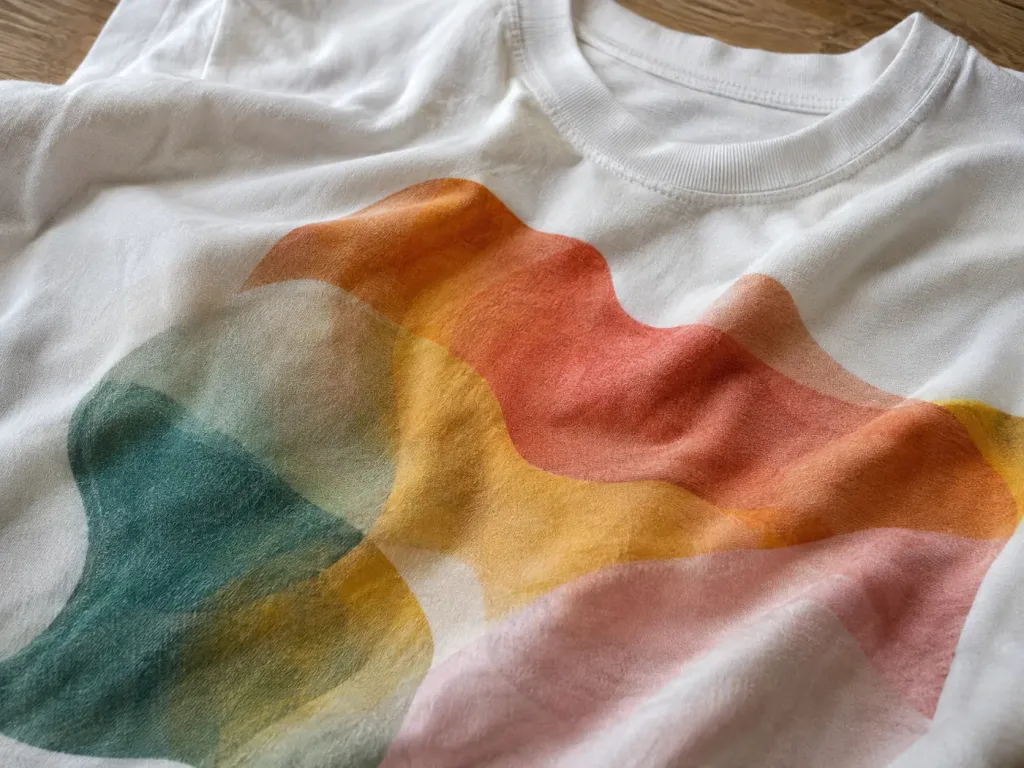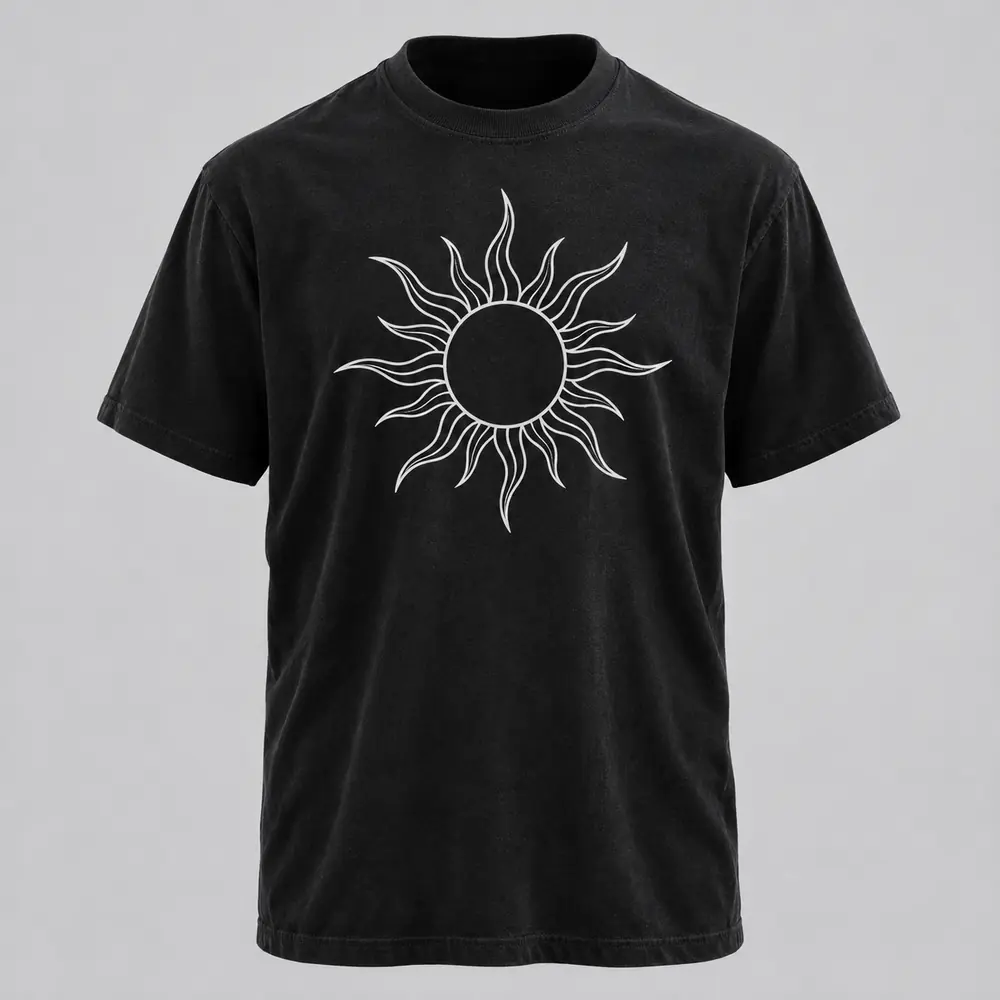
Specialty screen printing is where a print stops being flat. Puff ink rises off the shirt, discharge ink pulls color out of the fabric, and a soft water-based print disappears into the cotton. These effects are having a big moment in 2026, and they are some of the most fun jobs we pull in our Orlando studio. Here is what each one does, what it needs and when it is worth the extra cost.
Why texture is back
For years, the goal was a print you could not feel. Now, however, many people want the opposite. Trend roundups for 2026, like Realthread’s apparel trends, point to puff and tactile prints, often mixed with flat ink in the same design. A raised logo or a soft discharge print makes a plain tee feel designed rather than decorated.

Specialty screen printing at a glance
| Effect | What it does | Best on | Watch out for |
|---|---|---|---|
| Puff | Ink rises into a soft, foamy 3D layer | Bold shapes, logos, lettering | Fine detail fills in |
| Discharge | Removes dye from the shirt, leaving a soft, light print | Dark, 100% cotton garments | Fails on polyester |
| Water-based on light cotton | Ink soaks in for a print you can barely feel | White and natural tees | Less opaque on darks |
| High density | Thick, sharp-edged raised layers | Small, crisp graphics | Needs special screens |
| Metallic and shimmer | Adds sparkle or a metal sheen | Accents, not whole designs | Can feel stiffer |
Puff ink
First, puff ink contains an additive that expands with heat. So we print it like a normal plastisol, and then it rises in the dryer into a soft, spongy layer you can feel with your eyes closed. As a result, the effect is playful and very tactile.
Puff works best on bold, simple shapes: chunky lettering, a logo, a cartoon outline. Thin lines, however, tend to swell together, and small text can turn into blobs. As a rule, if a detail is smaller than a pencil eraser, it should probably stay flat.
Mixing puff and flat ink
Our favorite use is contrast. A flat-printed design with one raised element, like a name or a mark, draws the eye and the hand to exactly that spot. It costs one extra screen, but it is worth it.
Discharge ink
Discharge is the clever one. Instead of covering the shirt with color, it uses a reducing agent that strips the dye out of the cotton during curing. The print ends up as the natural color of the fiber, or a new color if pigment is added to the discharge base. Also, Thrive Screen Printing’s discharge guide covers the chemistry well.
The result is a print on a black shirt that feels like nothing at all, with a slightly worn, vintage look. In fact, it is the softest way to put a light design on a dark garment.
What discharge needs
- Cotton. Discharge only works on fibers dyed with the right kind of dye. So polyester will not discharge, and blends give a faded, uneven result.
- A test. Even two black cotton shirts from different makers can discharge to different colors. We always test the exact blank first.
- Ventilation and care. It releases fumes when cured, so it is a studio-only process.
Because results vary by garment, we never promise an exact discharge color. Instead, we show you a test print on the real shirt before the run.
Water-based as a specialty look
It might seem odd to call water-based ink a specialty. Still, on a natural or white heavyweight tee, a well-mixed water-based print has a look plastisol cannot copy: matte, soft and slightly sun-faded from day one. That is why many brands now choose it. We compare it in detail in water-based vs plastisol ink.
High density and metallics
High density printing builds thick, sharp-edged layers using special thick-stencil screens. It is firmer and crisper than puff, which is soft and rounded. Metallic and shimmer inks, on the other hand, add sparkle. Both work best as accents. A whole shirt of metallic ink can feel stiff, while a single metallic detail looks expensive.
What specialty screen printing costs
Specialty inks cost more to buy, and they take more care on press. Also, puff and high density often need slower printing and different screens. Discharge needs testing. As a result, specialty screen printing usually adds to the per-shirt price, and sometimes a screen. The basics of pricing are in how much screen printing costs.
Our advice: use one effect, in one place, on purpose. After all, a single puff element or a discharge print on the right shirt gives most of the impact for a fraction of the cost.
Choosing the right garment
The garment can make or break a specialty print. Discharge needs cotton. Puff, however, loves a smooth, sturdy surface, like a heavyweight t-shirt. Fleece hoodies take puff beautifully too, especially on the chest. Tell us the effect you want first, and we will suggest a blank that will carry it.
Pairing effects with the right ink
Specialty screen printing works best when the effect matches the base ink. Puff is a plastisol additive, so it pairs naturally with plastisol colors in the same design. Discharge is usually water-based, so it suits designs that also use soft water-based inks. Mixing the two families in one print is possible, but it takes more testing and care. Our guide to water-based vs plastisol ink explains each family.
Specialty screen printing for small runs
Can you get puff or discharge on a run of 24? Yes. Our minimum is the same 12 pieces as any custom run, so the answer is simple. The catch is cost per shirt: the testing and slower printing are shared by fewer pieces. So for very small runs we suggest one effect on one element, which keeps the price reasonable.
For larger runs, specialty screen printing becomes much easier to justify. Once a run passes a hundred pieces, the extra setup almost disappears, and the effect is what people remember about the shirt.
What we will tell you before we print
- Whether your artwork suits the effect, and what to change if not.
- Which blank carries it best.
- For discharge, the result of a test on the real shirt.
- The full price, with every extra shown.
Want to try one?
Send your design through our custom run form and mention the effect you are after. We will tell you honestly if the art suits it, and we will test discharge on the real shirt before anything goes to press. For more on how a print comes together, see the screen printing process.
Specialty print questions
Does discharge ink work on polyester?
No. Discharge removes dye from cotton fibers, so polyester will not discharge and blends give a faded, uneven result. We test the exact blank before a run.
Is puff print durable?
Yes, when it is cured properly and washed gently. Heat and pressure, like ironing, can flatten it, so wash it inside out and hang dry.
Can puff ink print fine detail?
Not well. Puff expands, so thin lines and small text fill in. It works best on bold shapes and lettering.
Do specialty inks cost more?
Usually yes. They cost more to buy and take more care on press, and discharge needs a test print. One effect in one place gives most of the impact.